
New Publication: The Politics of Measurement in the Age of Localization
The Politics of Measurement in the Age of Localization: Comparing “Top-Down” versus “Bottom-Up” Metrics of Reconciliation
international political sociology
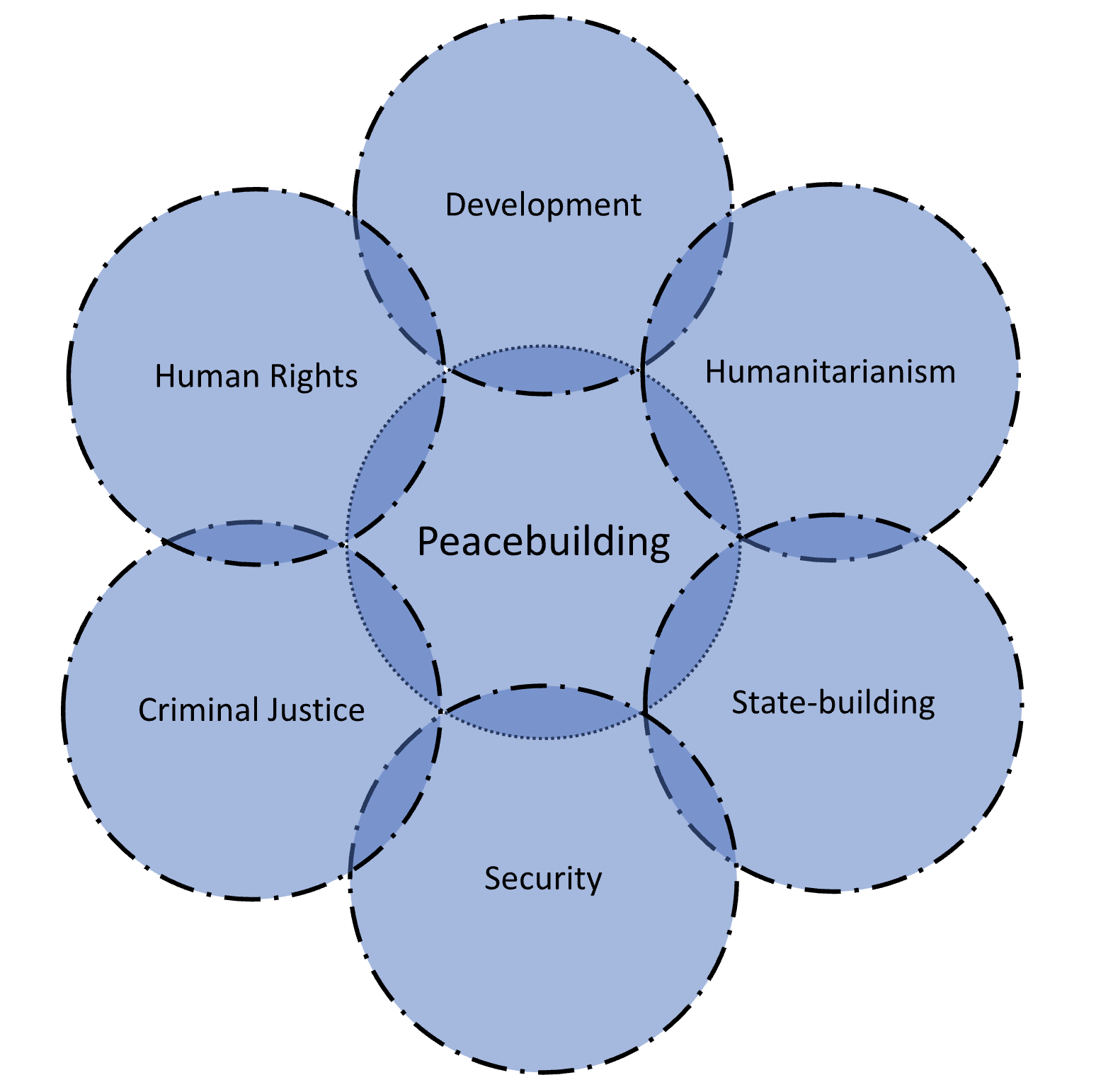
The peacebuilding sector as an ‘interstitial’ professional field
In this article, Pamina Firchow and I examine the politics of measurement in peacebuilding by analyzing how reconciliation is operationalized through competing indicator regimes in post-accord Colombia.
Drawing on a comparative assessment of two nationally standardized reconciliation “barometers” (produced by a state victims’ agency and an international development organization) and our own community-generated Everyday Peace Indicators (EPIs) developed through participatory processes in local communities in Antioquia and Cauca, we show that measurement practices are both reflective of and serve to reproduce the social fields from which they come.
Measurement, that is, is not a technical exercise.
Standardized barometers privilege state-centric and institutionally legible dimensions of reconciliation—such as formal rights, dignity, and state-led processes of reckoning with the past—while EPIs disproportionately emphasize relational and cultural domains, including everyday social interaction, collective practices, and locally salient norms of coexistence. These differences are not reducible to variation in item wording; they encode distinct ontologies of reconciliation and, consequently, distinct theories of social order after violence.
We theorize indicator construction as a site of symbolic power in which actors compete to define the object of governance and the criteria of progress. By rendering particular dimensions of reconciliation commensurable and comparable, top-down indicators amplify the epistemic authority of state and international actors and reallocate attention toward domains that are administratively actionable and donor-reportable.
Conversely, bottom-up indicators can expand the evaluative space to include forms of social repair that are consequential for everyday life yet systematically obscured by national aggregation and audit imperatives. The article advances a field-analytic account of reconciliation metrics as classificatory devices that shape organizational priorities, legitimate intervention logics, and structure what kinds of claims about “peace” can circulate as credible.